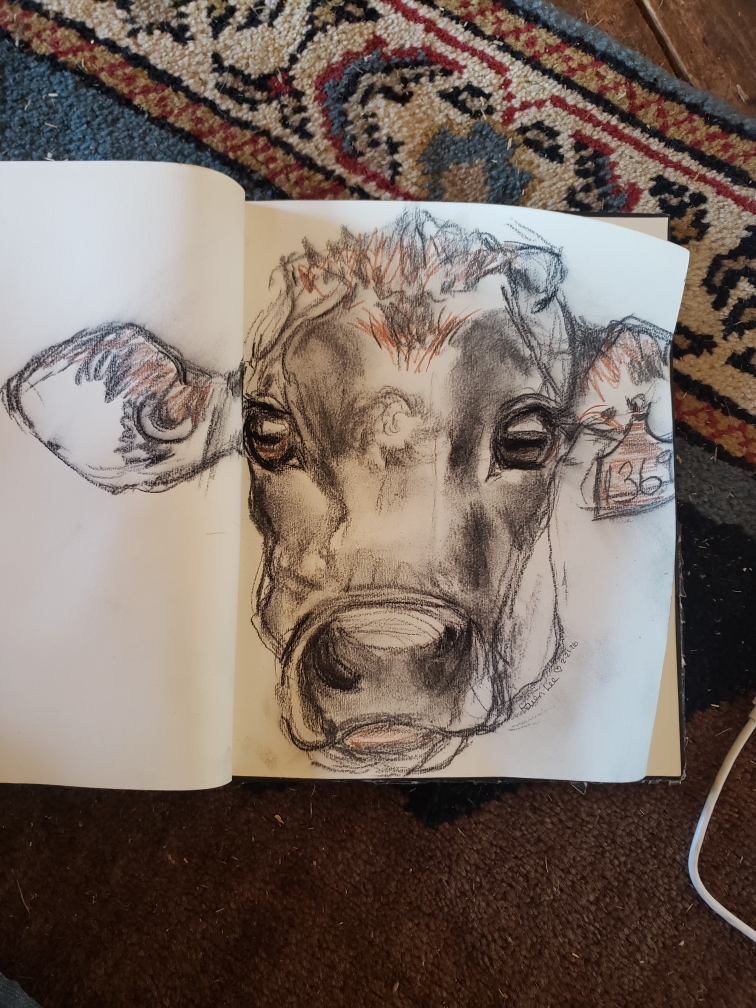
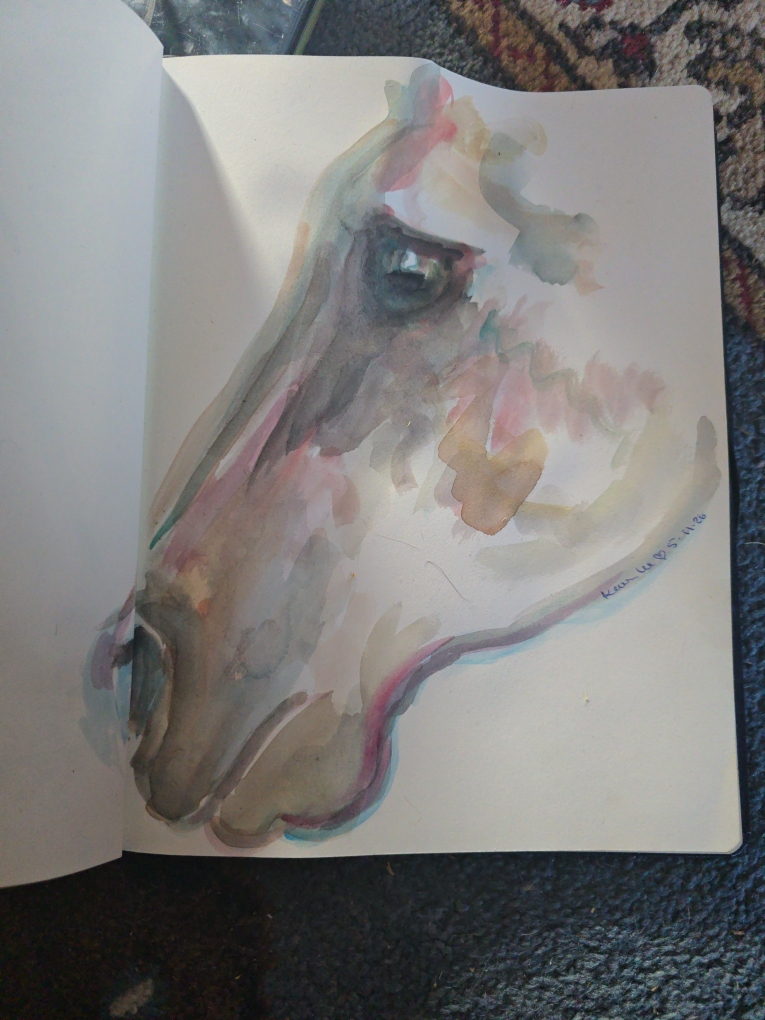
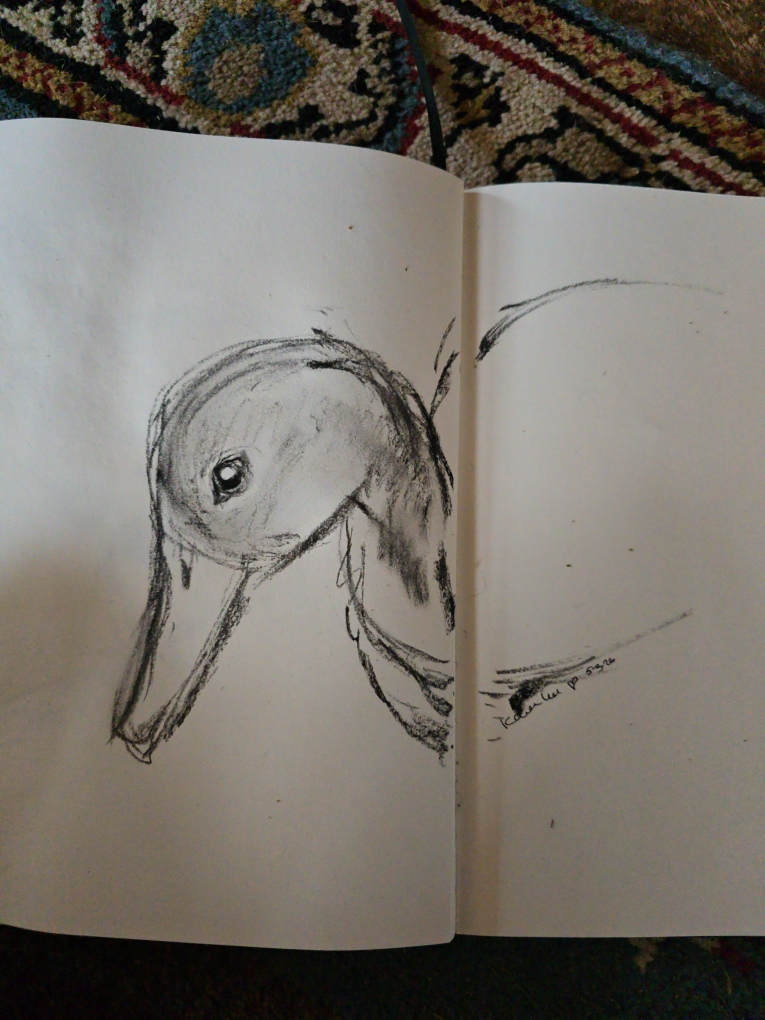
Karen Hitchings works in charcoal and paints. Her subjects are animals, but her real subject is presence. Charcoal is an unforgiving medium: it doesn’t hide mistakes, and it doesn’t let you pretend. Her work has the feeling of bringing an image; a living being, to life.
I sat down with her to ask a few questions about what it means to look closely at a living being, see its soul, and bring it to life on the page.
- What draws you to animals as your primary subject?
That’s a really good question. I am really not sure. I love drawing them; I love drawing eyes, I love drawing the faces of the animals. I do draw some humans and I do draw some landscapes and some flowers. I’m just not as proficient with those, I would say, but maybe that’s not really true. I just feel that I’m really sharing who the animals are. I really ask if it’s okay for me to learn about their likeness. And I feel like when I draw animals faces and even again, human faces or landscapes, or whatever it may be. I feel like I get to know them in a way that I wouldn’t have ever gotten to know them. And then it’s almost like I carry that image with me. And it’s interesting because I see it. I draw with both hands, and I paint with both hands, too.
And so when I’m using my left hand as opposed to my right hand, the images are very different. I don’t know, I’m forever intrigued, I guess, by who this sentient being is, and how I might be able to share their spirit on a piece of paper. That others could really feel them and be sort of changed by the thing that I’m drawing. - Do you work with charcoal, and why?
Yes, I do. One of the things that I do a lot is, we have a wood stove like you and your mom do, and I use the wood that we burn in the stove. It’s like this whole transforming, right? I always ponder, you know. Like when this was a small tree and then a large tree, and when it passed away, and then when it was cut down. I really spend time with each one of the pieces. My biggest happiness is probably the fresh charcoal.
And that’s what I draw with. Each one of the pieces has its own individual personality. When you get charcoal in an art store, or wherever, it’s already pressed and it might be in a pencil or something like that. But sometimes I get really fond and attached to a piece, which is really funny. Some are creamier and some are stiffer or lighter, and some will make a really nice gray tone while others do not. - What do you hope people feel when they look at your art?
I hope they feel God. That’s what I hope. I hope it touches somewhere inside of them that is so pure and good, and that they feel God. - Can you walk us through your process from blank page to finished piece?
For the longest time, I never felt good enough to actually… I think you feel like you have to show up with some kind of perfection. I was always like, you know, I’m not at the level to actually make marks on this page, or this paper, or this watercolor, or this canvas. I think that, at least for me, in the past I threw away so many images because I absolutely hated them. And I realized that -hates a big word, I really disliked them- and would throw them away. It’s almost as if it doesn’t bloom or transform, then I dislike them. For me it’s about recognizing that this is part of the process. On the other side of that is something I’m really going to fall in love with. And it’s just part of the journey. And now when I’m getting to the really horrible part, I start getting excited, I’m like, oh, this is going to be so good, right?
And so back to the blank page. I think that blank page represents everything in our lives that is external, that we’re trying to perfect or that we don’t like or that we have anxiety about. And so, for me, I notice that if I just show up and pretty much as God, like, what would you like me to do, right? Show me what you want me to do. And then that’s what starts the process. Like when I was in Scotland, and sitting, say, in a bagpiping session, and you can’t really do anything, I would sketch things around me in the room. It kind of brings the external inside. I was in a room that had a gigantic stag head and it was hilarious because there was a kind of famous piper who was sitting not far from me, and his wife. And I kept looking over and they were kind of like, why are you looking over at us?
So finally after the whole thing, I’m like, this is what I was sketching and they’re like oh, that’s really neat!
I like to invite people in to whatever the experience is. It touches them with something bigger than themselves.
For Karen’s website, visit www.drkarenhitchings.com
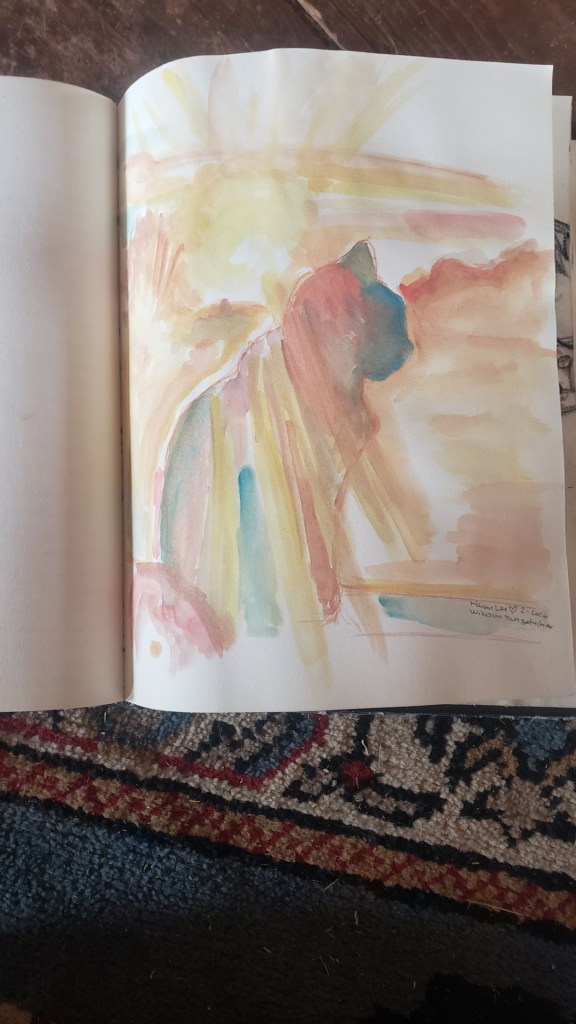
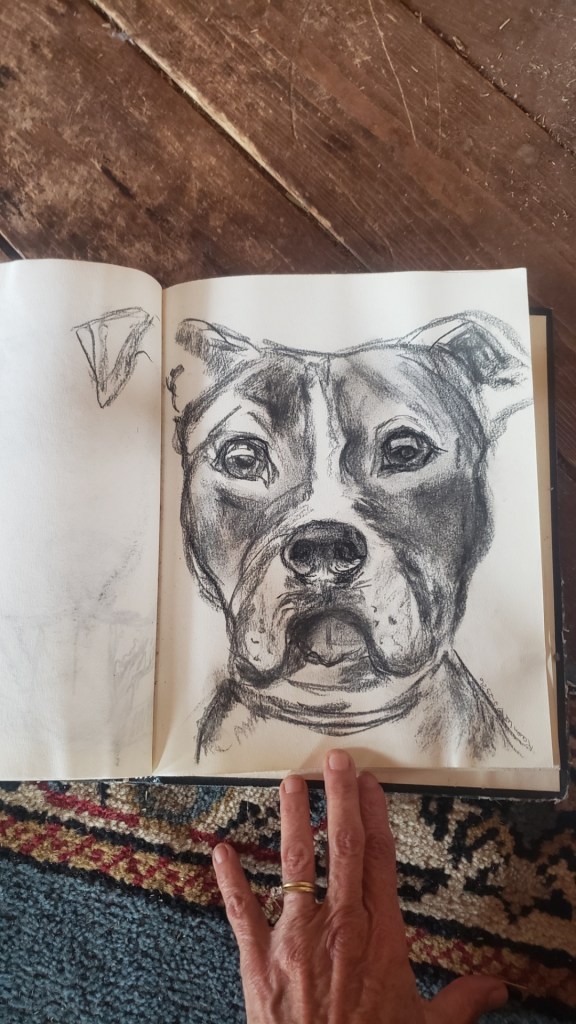
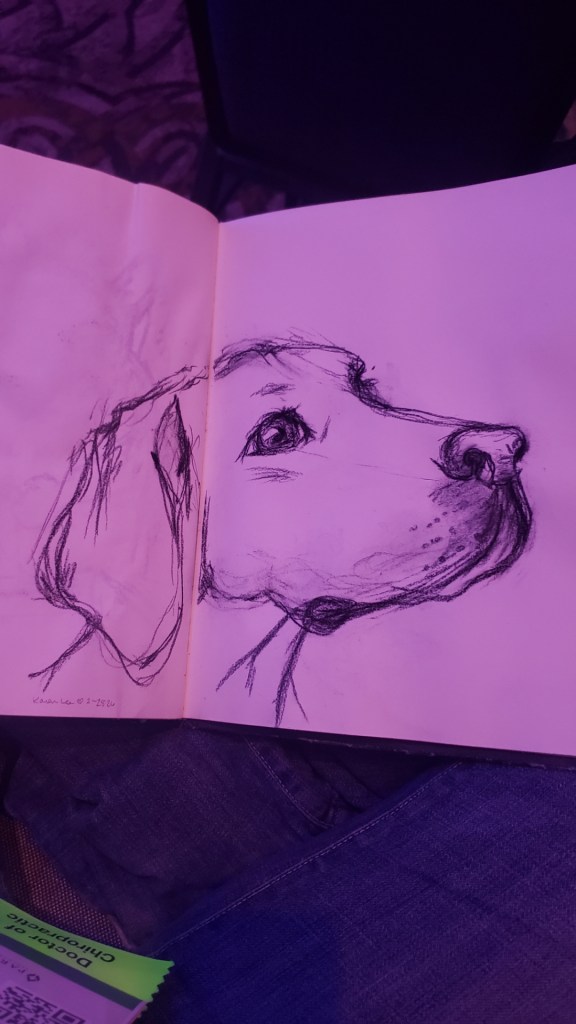
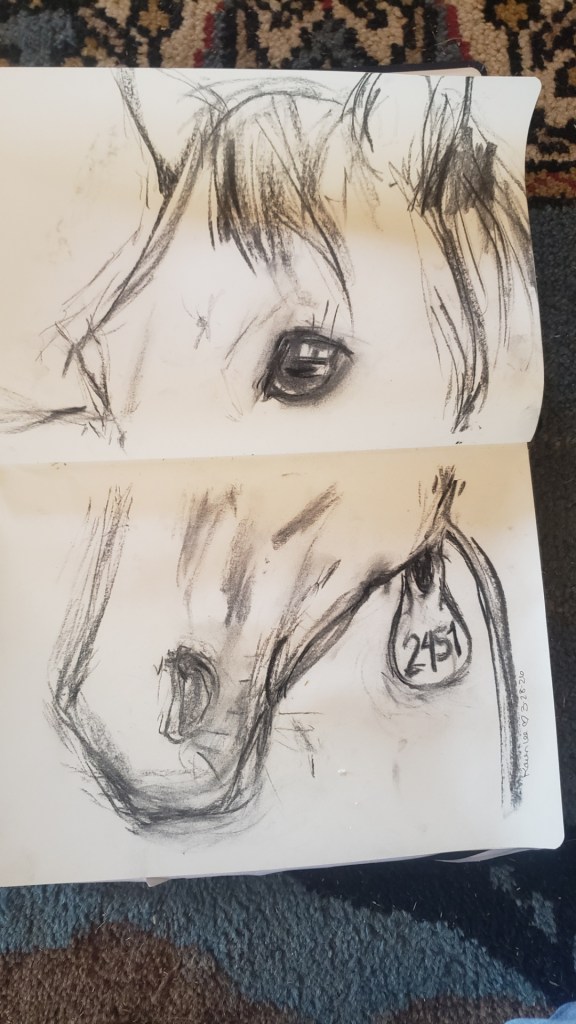
Pictured above: A BLM horse (a wild mustang managed by the BLM) waiting to be adopted.
 Original & Unfiltered
Leave a comment